


The Real Numbers: Dess Components Can Make Implant Cases More Profitable (Without Cutting Corners)
Let's talk about one of the things that keep us all up at night: The economics of implant cases. You get that case in, and before you even open the box, you're doing mental math on whether you'll actually make any money on it.
Look, I've been in this business long enough to know that we're all trying to deliver outstanding quality while keeping the lights on. And here's what I've learned: the components you choose can make or break your profit margins on implant cases. So let me share what I've discovered about how DESS components can help you deliver the same quality (honestly, sometimes better) at a price point that actually makes sense.
The Profit Squeeze Nobody Talks About
OEM components are expensive. Really expensive. And while they do a great job, you and I both know that a significant chunk of what you're paying for is the name on the package. Now, I don’t hesitate to use OEM – when the Dr requests it, and for the most part the manufacturers components work great.
But here's the thing: doctors aren't going to pay you double just because you used OEM components. Your case is priced at what the market will bear, regardless of whether you spent $150 or $50 on the components. So every dollar you save on components that deliver the same quality goes straight to your bottom line. That's not cutting corners. That's being smart about business.
I've run the numbers, and switching to DESS components can honestly transform the profitability of implant work. Let me walk you through some real scenarios.
Single Unit Restorations: Where It All Starts
Single crowns are the bread and butter, right? Let's break down what a typical single implant crown looks like with DESS components. For a standard single unit case, here's what you need:
The Scanning Phase: You'll start with a DESS scan body. These are beautifully designed, and provide a few special benefits. They have no screw access hole on top, which dramatically improves the Z-axis precision. No screwdriver needed either. You just hand-tighten, and they click when they're seated properly. The scan bodies work for both intraoral scanning and desktop scanning on models, so you only need to stock one type. They're made of titanium with a internal screw, and they're integrated into the official libraries for 3Shape, exocad, and Dental Wings. Download the library files, install them (it takes about five minutes), and you're ready to roll.
The Restoration Components: Once you've got your scan, you need to decide on your abutment solution, then you'll design your restoration. Now, everyone knows I’m a fan of custom abutments – but there are situations where a stock component (ti-base) is required. This is where DESS really shines.
DESS Ti-Bases come in both engaging and non-engaging versions, and they're compatible with pretty much every major implant system you can think of. The vertical wall design gives you excellent retention for bonding, and they come pre-sandblasted with the SelectGrip surface treatment.
SelectGrip isn’t just a fancy marketing name - it provides 500% greater adhesion compared to standard surfaces. Five times better retention! That means fewer callbacks for de-cemented crowns. And it's already done when you receive the Ti-Base, so you're not spending time in your lab sandblasting or treating surfaces. Time = money.
The Economics: Here's where it gets interesting. Without getting into specific vendor pricing, I can tell you that DESS scan bodies and Ti-Bases typically run 30-50% less than comparable OEM components. On a single unit case, that might only save you $40-60. But if you're doing 20 single unit cases a month, that's $800-1,200 going straight to your profit. Over a year? We're talking about $10,000-15,000 or more.
And you're delivering the exact same quality. The restoration looks identical. The fit is identical. The longevity is identical (actually, with that SelectGrip surface, probably better). Does the doctor really care what brand of Ti-Base is under that crown? Maybe…then go with the OEM, and figure out your profit margin. I feel that most Dentists primarily care that it fits perfectly and stays in place.
Multi-Unit Cases: Where the Savings Really Add Up
Here is where DESS components really start to make a difference in your bottom line: multi-unit cases and full-arch restorations. These are the cases where component costs can get out of control fast if you're not careful.
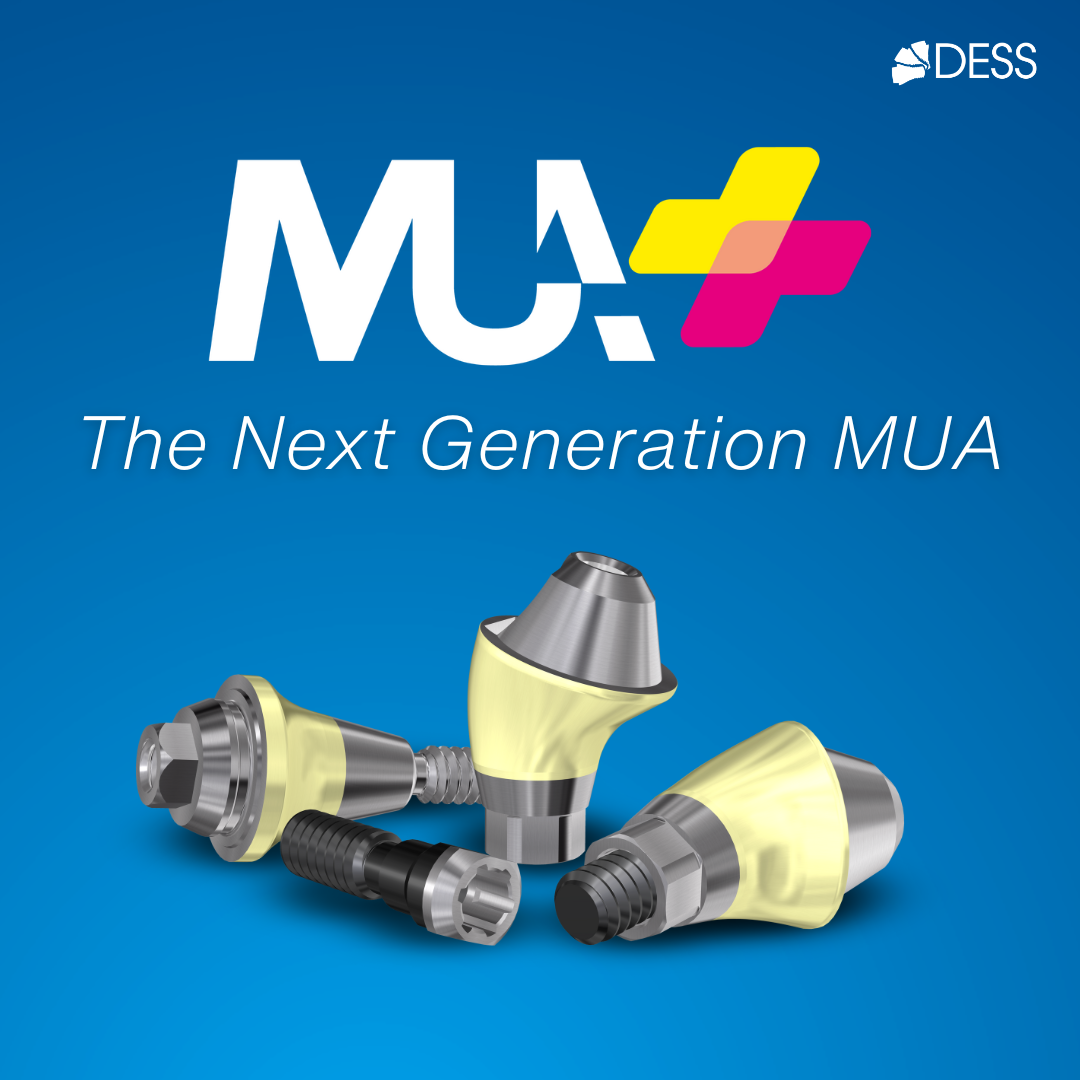
Multi-Unit Abutments (MUAs): If you're doing any implant-supported bridges or full-arch cases, you need to know about DESS MUAs. These are game-changers, and here's why.
First off, DESS offers both straight and angled MUAs. The angled versions come in 17° and 30°, which covers just about any clinical situation you're going to encounter. When a doctor places implants with different angulations (and let's face it, that happens - a lot), you need to be able to correct those angles at the abutment level.
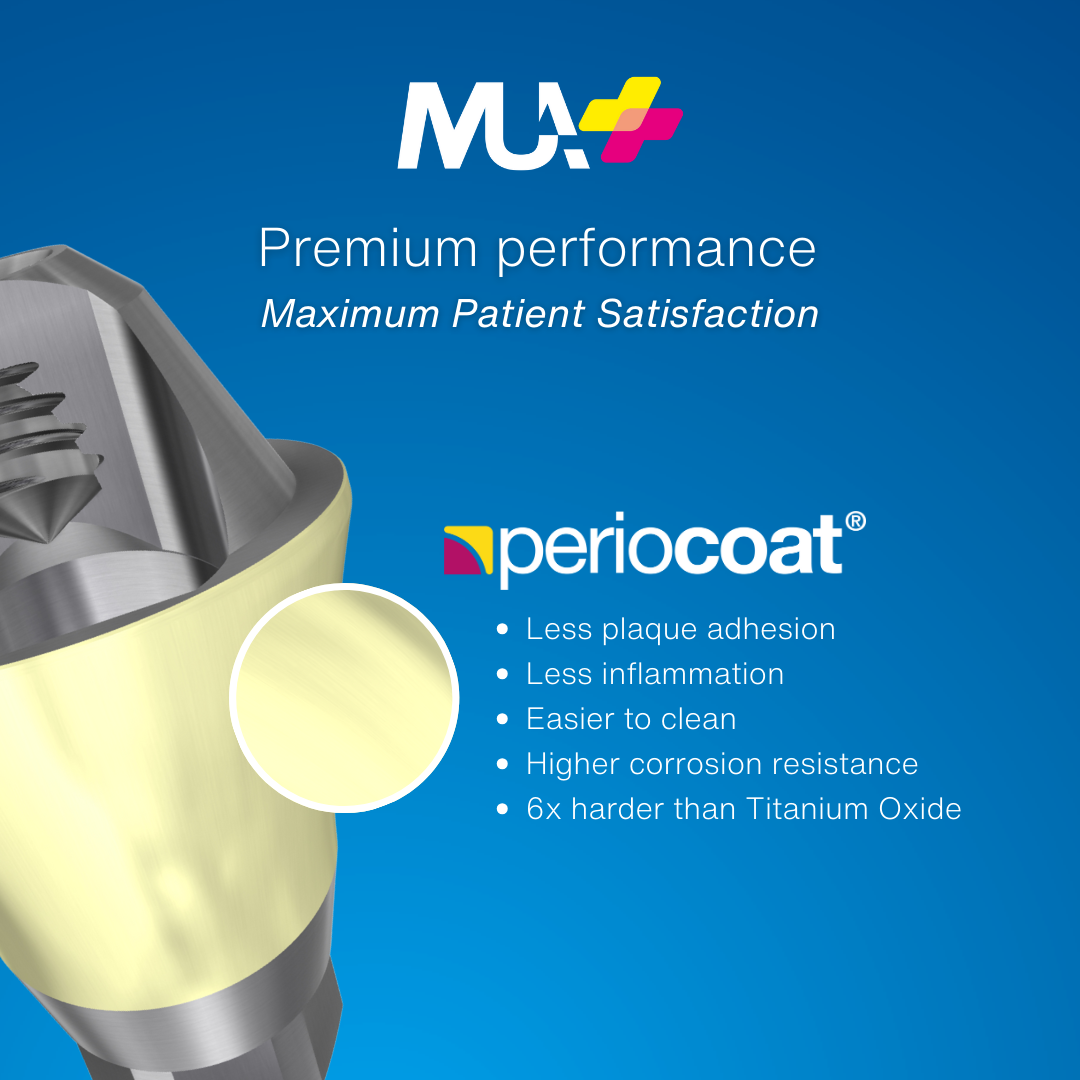
The DESS MUAs have a 4.8mm diameter connection on top, which is compatible with Nobel Biocare Multi-Unit components. That means you can use them interchangeably, and your existing workflows don't need to change. The MUAs feature Periocoat technology, which is a surface treatment that reduces plaque adhesion and increases corrosion resistance. Your restorations will have better tissue response and longer-term stability.
But here's the beautiful part: DESS MUAs cost significantly less than OEM versions, sometimes 40-60% less.
On a full-arch case where you might be using 4-6 MUAs, that's hundreds of dollars saved on a single case.
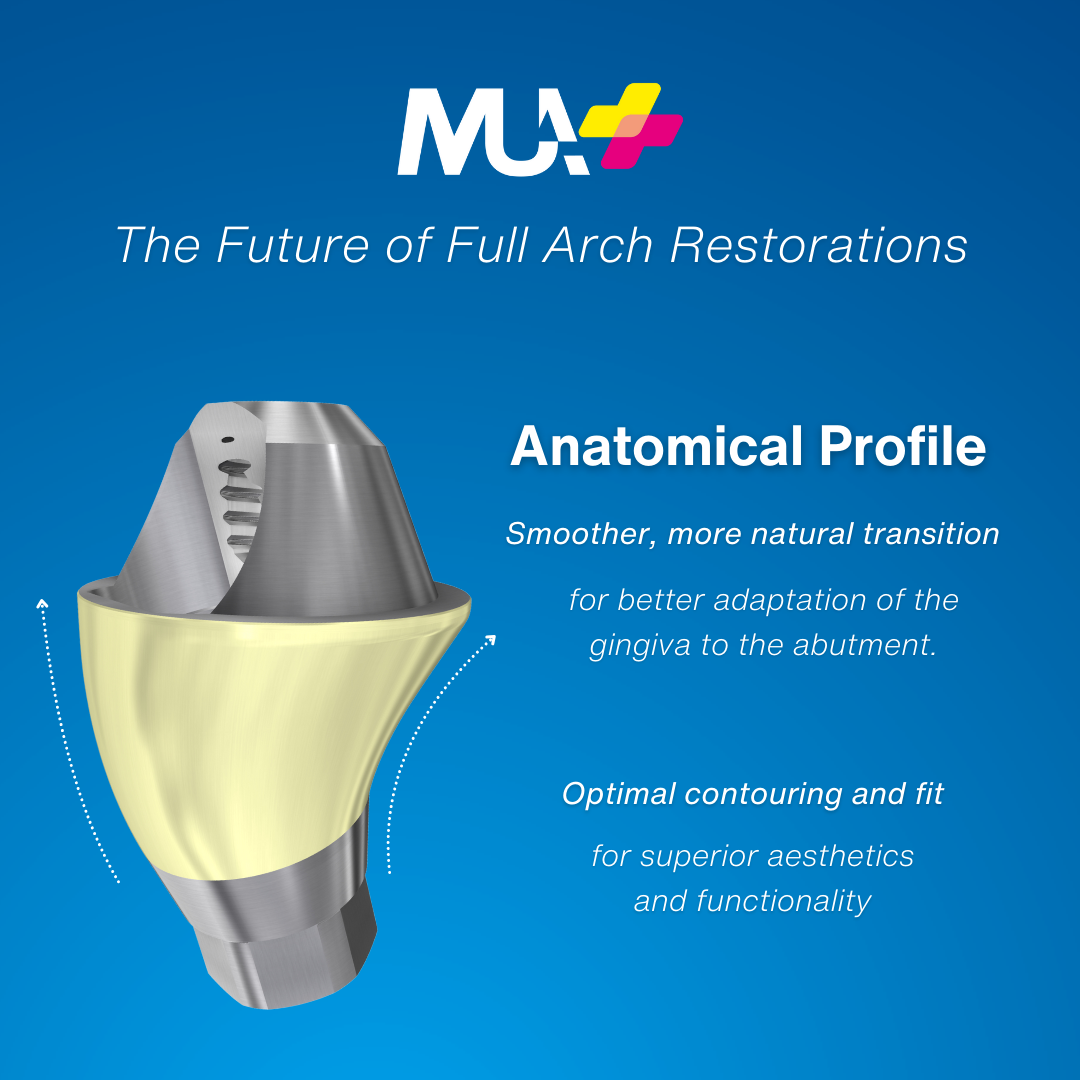
The MUA Plus Advantage: I want to mention the DESS Multi-Unit Plus (MUA+) specifically because it has some features that really set it apart from competitive MUAs. The MUA+ has an optimized collar design that improves tissue management around the restoration. It also has enhanced retention features that make the final prosthesis more stable. For full-arch cases, this matters. You want that prosthesis locked in solid, and you want healthy tissue around the MUAs. The MUA+ delivers on both counts, and it's still priced below OEM alternatives.
Scan Bodies for MUAs: Don't forget you'll need scan bodies for those MUAs too. DESS makes their scan bodies specifically designed to scan on top of multi-unit abutments. They're reusable, autoclavable, and they work with all the major scanner systems. Stock a few of these, and you're covered for any MUA case that comes through your door.
Full-Arch Hybrid Cases: The Complete Picture
Let’s walk through a complete full-arch hybrid case using DESS components, because this is where you really see the economic advantage.
Case Setup: Let's say you have a doctor who placed four implants for a full-arch hybrid. Two are straight, and two are angled. This is a super common scenario.
Components Needed:
- 4 DESS scan bodies (direct to implant or on MUA, depending on the approach)
- 4 DESS MUAs (2 straight, 2 angled 17° or 30° depending on the angles)
- 4 MUA screws for final prosthesis
- Attachment
- Ti framework (designed and SLM printed or milled)
- Zirconia, acrylic, composite, or milled hybrid overlay
The Workflow: You'll scan with the DESS scan bodies (either direct to implant if the doctor took the impression at the implant level, or on the MUAs if they're already placed). Design your framework with the proper screw channels. Mill or outsource the framework. Design and process your prosthetic teeth and gingiva. Assemble everything. Torque it down with the MUA screws.
The Economics: For components alone on this case, using OEM parts, you might spend $600-800 or more.
Using DESS components, you're looking at $300-450 for the same case. That's $250-400 saved on one case.
Multiply that by the number of full-arch cases you do in a year. If you're doing just one full-arch case per month, that's $3,000-5,000 per year in pure profit improvement. Do more cases? The savings scale proportionally.
And remember, you're delivering identical quality. FDA cleared. The framework fits the same. The screw access holes line up perfectly. The prosthesis is stable and secure. Your doctor is happy. The patient is happy. And you just made several hundred dollars more profit on that case.
Screw-Retained Single Crowns and Bridges
Let's not forget about screw-retained restorations. These are becoming more popular, especially for posterior cases where access and retrievability matter.
The Components: For screw-retained restorations, you have a couple of options with DESS:
- Implant Custom Abutments: Use the DESS pre-mill blanks to mill a custom titanium abutment that screws directly into the implant. Design your screw channel, mill the abutment, and then cement your crown with screw channel onto the custom abutment.
- Stock abutment (Ti-Base with Screw Channel): Design a crown with an integrated DESS Ti-base abutment, with the screw access hole running through the crown. The DESS AngleBase gives you up to 25° angle correction!
Both approaches work great, and both are significantly less expensive than using OEM components. The premill blanks are especially economical because you can mill the abutments in your lab using the DESS FDA cleared PnP workflow.
The Screws: Don't overlook the screws themselves. DESS offers a complete range of screws for different applications - abutment screws, prosthetic screws, Ti-Base screws, and MUA screws. They're all manufactured to precise specifications and they are exact matches to the original manufacturer's screws.
Stock a good selection of commonly used screws, and you'll be able to handle any case that comes in without waiting on special orders or paying premium prices for OEM screws.
Implant-Supported Bridges: The 3-4 Unit Sweet Spot
Implant-supported bridges are another common restoration type where DESS components deliver excellent economics.
Typical Case: Let's say you have a 3-unit bridge supported by two implants. You'll need:
- 2 DESS scan bodies for capturing the implant positions
- 2 DESS Ti-Bases for cemented bridges, or MUAs for screw-retained bridges
- 2 Ti-Base screws or MUA screws
- Your bridge framework and final restoration
Design Flexibility: The nice thing about DESS Ti-Bases is that they come in a huge variety of heights and angles. You can use straight bases if the implants are well-aligned, or you can use the ANGLEBase versions if you need to correct angulation discrepancies. The ANGLEBase Ti-Bases provide up to 25 degree correction and allow you to create a common path of insertion for your bridge even when the implants aren't parallel.
Component Cost Comparison: For a two-implant bridge, you're typically saving $80-120 on components versus OEM parts. And you're getting the SelectGrip surface treatment, which gives you better retention. You're getting components that are already sandblasted and ready to bond. You're getting quality that's equal to or better than OEM in every measurable way.
Stocking Strategy: How to Set Up Your Dess Component Inventory
Here’s some thoughts on stocking DESS components in your lab. You don't need to stock everything, but having the right components on hand will save you time and money.
Essential Scan Bodies:
- Stock scan bodies for your top 5-6 most common implant systems
- Stock 2-3 scan bodies for MUAs
- Keep some scan body extenders on hand for deeper implant placements
Ti-Bases - The Core Selection:
- Engaging Ti-Bases in NP (narrow platform), RP (regular platform), and WP (wide platform) for your top 3-4 systems
- Non-engaging Ti-Bases in the same diameters
- A selection of ANGLEBase Ti-Bases in 15° and 25° for angle correction
- Various heights: 1mm, 2mm, 3mm for the most common diameters
MUAs - Build As You Go:
- Start with straight MUAs for your top 2-3 implant systems
- Add 17° and 30° angled MUAs as you get cases
- Keep MUA screws in stock for final prosthesis attachment
Pre-Mills and Blanks (DESS PNP):
- If you're milling custom abutments, stock some DESS pre-mill blanks
- These come in titanium and can be used for the PNP workflow (that's a whole other topic - Plug-and-Play workflow for FDA compliance – see my previous article)
- Having blanks on hand means you can turn around custom abutments quickly
Screws and Small Parts:
- Stock abutment screws for your common systems
- Stock Ti-Base screws (usually universal fit)
Digital Libraries: Make sure you download and install the DESS digital libraries for your CAD software. They're free, they update regularly, and they have every DESS component in them. Installation takes just a few minutes, and then everything is right there in your design software when you need it. You can find the DESS Libraries Here!
Quality Check: Are Dess Components Really As Good?
Look, I know what some of you are thinking. "If these components are so much cheaper, what's the catch? What am I giving up?" I've asked myself the same questions, so let me share what I've found after visiting the DESS manufacturing facility and using DESS components for several years now.
Manufacturing Quality: DESS has been making precision components for the medical and dental industries for over 50 years. The tolerances are tight. The materials are high-grade titanium (Grade 5 ELI). The machining is excellent. When I put a DESS Ti-Base next to an OEM Ti-Base and inspect them under magnification, I honestly cannot tell a difference in quality.
FDA Clearance: All DESS components sold in the US are FDA cleared. This matters, especially as the FDA is paying more attention to dental labs and the devices we produce. Using FDA-cleared components is one way to protect yourself and your lab.
Surface Treatments: The SelectGrip surface treatment on Ti-Bases is actually superior to many OEM treatments. That 500% improvement in retention isn't marketing fluff. I've done pull tests (okay, not scientifically rigorous ones, but practical ones), and crowns bonded to Dess Ti-Bases are rock solid.
The periocoat treatment on MUAs is a titanium-nitride coating that really does reduce bacterial adhesion. Your full-arch cases will have healthier tissue around the MUAs compared to untreated abutments.
Fit and Function: The scan bodies capture positions accurately. The Ti-Bases fit the implants precisely. The MUAs are stable and well-designed. The screws torque to spec. Everything works exactly as it should.
Clinical Outcomes: This is what really matters, right? How do the final restorations perform? In my experience, they perform identically to restorations made with OEM components. Crowns stay cemented.
Bridges are stable. Full-arch cases function beautifully. I haven't seen any difference in clinical outcomes.
So What Are You Actually Giving Up? In my opinion, the only thing you're giving up is the premium price. That's it. You're not giving up quality. You're not giving up reliability. You're not giving up clinical outcomes. You're just not paying extra for a name brand when a high-quality alternative exists.
The Bottom Line: Real Numbers for Real Labs
Let me put some actual numbers on this so you can see what it might mean for your lab.

Small Lab Scenario (20 implant cases per month):
- 15 single crowns: Savings of $50 per case = $750/month
- 3 bridges: Savings of $100 per case = $300/month
- 2 full-arch cases: Savings of $300 per case = $600/month
- Total monthly savings: $1,650
- Annual savings: $19,800
Medium Lab Scenario (50 implant cases per month):
- 35 single crowns: Savings of $50 per case = $1,750/month
- 10 bridges: Savings of $100 per case = $1,000/month
- 5 full-arch cases: Savings of $300 per case = $1,500/month
- Total monthly savings: $4,250
- Annual savings: $51,000
Large Lab Scenario (100 implant cases per month):
- 70 single crowns: Savings of $50 per case = $3,500/month
- 20 bridges: Savings of $100 per case = $2,000/month
- 10 full-arch cases: Savings of $300 per case = $3,000/month
- Total monthly savings: $8,500
- Annual savings: $102,000
These aren't made-up numbers. These are realistic savings based on actual component cost differences. And remember, these savings come with zero reduction in quality. You're delivering the exact same restoration quality to your doctors.
Making the Switch: Practical Advice
If you're convinced (or at least curious) about switching to Dess components, here's how I'd recommend doing it:
Start Small: Don't try to switch everything overnight. Pick one or two component types and start using them. Maybe start with scan bodies since those are straightforward. Or start with Ti-Bases for single crowns. Get comfortable with them, and then expand.
Run Parallel for a While: When you're starting out, you might want to keep some OEM components on hand as a backup while you're building confidence in the Dess components. After a few months, you probably won't need the backup anymore, but it's nice to have during the transition.
Download the Libraries: Get the digital libraries installed right away. Visit the Dess website, go to the downloads section, and grab the libraries for your CAD software. Follow the installation instructions. Test them out on a case or two before going live.
Build Your Stock Gradually: You don't need to buy $10,000 worth of components on day one. Start with the essentials for your most common cases and build from there. As you do more cases, you'll figure out which components you use most frequently, and you can stock accordingly.
Talk to Your Doctors (If Needed): In most cases, you won't need to have any conversation with your referring doctors about component choices. It's a laboratory decision, and the final restoration is identical. However, if you have doctors who specifically request OEM components, you can have a conversation with them about the quality and FDA clearance of Dess components. Most doctors, once they understand that there's no quality difference, are happy for you to use components that improve your lab's profitability.
A Word About Ethics and Quality
I want to address something that sometimes comes up in these discussions. Some folks worry that using less expensive components is somehow cutting corners or compromising patient care.
Let me be crystal clear: choosing cost-effective, high-quality components is not unethical. It's good business. You're not deceiving anyone. You're not compromising quality. You're making smart decisions about where to allocate your resources.
Think about it this way: when a hospital buys generic medications instead of name-brand drugs, are they being unethical? Of course not. They're being responsible stewards of resources while delivering the same therapeutic outcomes. It's the same with dental lab components. As long as you're using FDA-cleared, properly manufactured components that deliver the same clinical outcomes, you're doing right by everyone - your doctors, your patients, and your own business.
In fact, I'd argue that improving your lab's profitability is ethical because it allows you to invest in better equipment, better training, and better staff. A profitable lab is a sustainable lab, and that benefits everyone in the long run.
Looking Forward: The New Economics of Implant Dentistry
The implant market is changing. There are more implant companies than ever before. There are more restorative component options than ever before. And laboratories that understand the economics of component selection are going to thrive.
Dess is part of this evolution. They're bringing high-quality components to market at prices that make sense for laboratories. They're making it possible for labs to be profitable on implant cases without compromising on quality.
This is good for everyone. It's good for labs because we can make money. It's good for doctors because they can offer implants at competitive prices. It's good for patients because they get access to high-quality implant restorations.
Wrapping It Up: Your Next Steps
Look, I'm not here to sell you anything. I'm just a lab guy who figured out something that's working really well for labs all over the globe, and I wanted to share it with you.
If you're struggling with the economics of implant cases, I encourage you to take a serious look at Dess components. Request some samples. Try them on a few cases. Compare them to what you're currently using. I think you'll be pleasantly surprised.
The components are excellent quality. The cost savings are real. The clinical outcomes are identical. And your bottom line will thank you.
So here's what I'd suggest: go to the Dess website, look through their product catalog, and identify a few components you use frequently. Order some samples or place a small order. Download the digital libraries. Try them on your next few cases. See for yourself.
I'm betting ya'll have the same experience and wonder why you waited so long to make the switch.
Until next time, keep making great restorations and running smart businesses.