


Choosing the Right Ti-Base: Why This Decision Matters More Than You Think

Jimmy Stegall, CDT | Here To Serve Dental LLC
Choosing the Right Ti-Base: Why This Decision Matters More Than You Think
Let's talk about something that I think gets glossed over way too often in our implant workflows — Ti-Base selection. I know, I know. It sounds like a basic topic. Most of us who have been doing implant cases for any length of time feel pretty comfortable with the component selection process. But I want to share a case with you that changed how I approach this conversation, because I think it's going to resonate with a lot of you.
A while back, I was working a screw-retained crown case — straightforward enough on the surface. I had my Ti-Base ordered and seated, started the design in 3Shape, and when I dropped in the screw access channel, it was coming straight out of the buccal cusp. Not slightly off. Right out of the cusp tip. The implant had been placed at an angle, and with a standard straight Ti-Base, there was no correcting for that at the design level. I was fighting the physics of the case instead of solving the problem.
The fix was an ANGLEBase. With up to 25 degrees of angular correction built into the component itself, I was able to redirect the screw access channel right back to the center of the crown — where it belongs. The design went cleanly, the restoration seated predictably, and I didn't have to apologize to the dentist for a buccal screw access on a first molar.
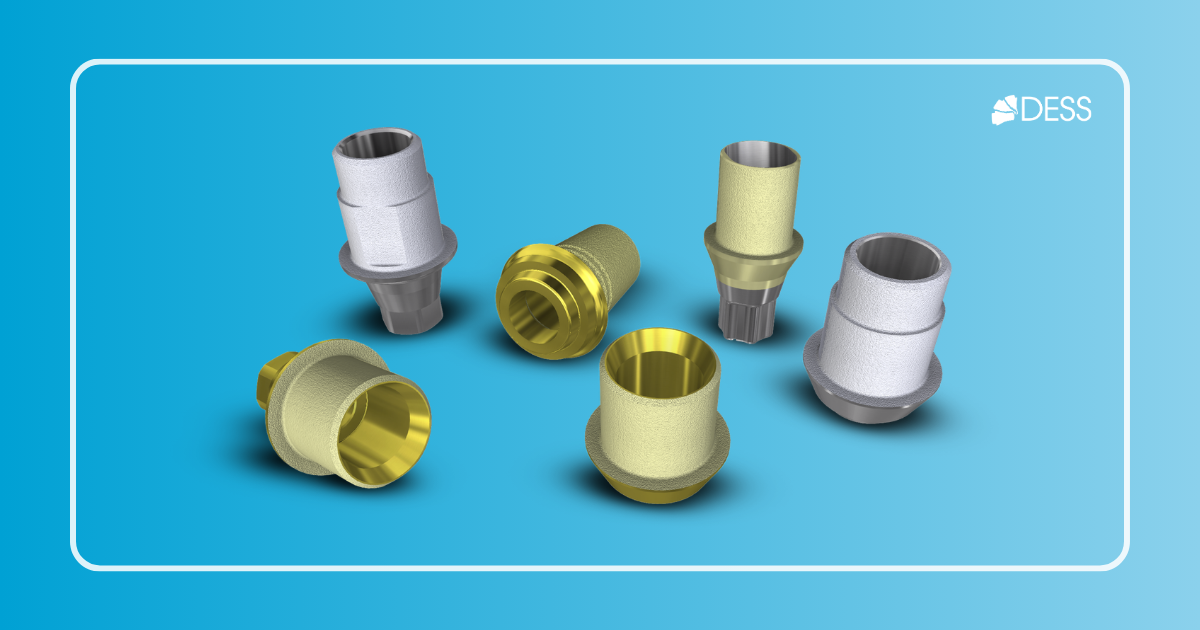
That case is a perfect example of why Ti-Base selection isn't just a component decision. It's a workflow decision. Pick the right one, and everything downstream gets easier. Pick the wrong one, and you're either remaking the case or delivering something that's going to cause problems. Let me walk you through the decision tree I use and the DESS options that cover each situation.
Start with the Tissue — Every Time
Before I even think about which Ti-Base I'm reaching for, the first question is always tissue depth. This is the one-minute check that saves a four-hundred-dollar remake, and it's a step I've seen Dentists skip more times than I can count. Tissue depth tells you what collar height you need. Get it wrong in either direction and you're creating problems — either the collar height is inadequate for the tissue thickness and you end up with cement contamination too deep in the sulcus, or the collar is too tall and you're fighting emergence profile in the design.
I'm not going to prescribe a specific measurement technique here, because every Dentist and every technician has their own method, and that's fine. What matters is that you're verifying tissue depth before the component is ordered, not after. Thirty seconds on the front end of the case can save a week on the back end. This is step one, full stop.
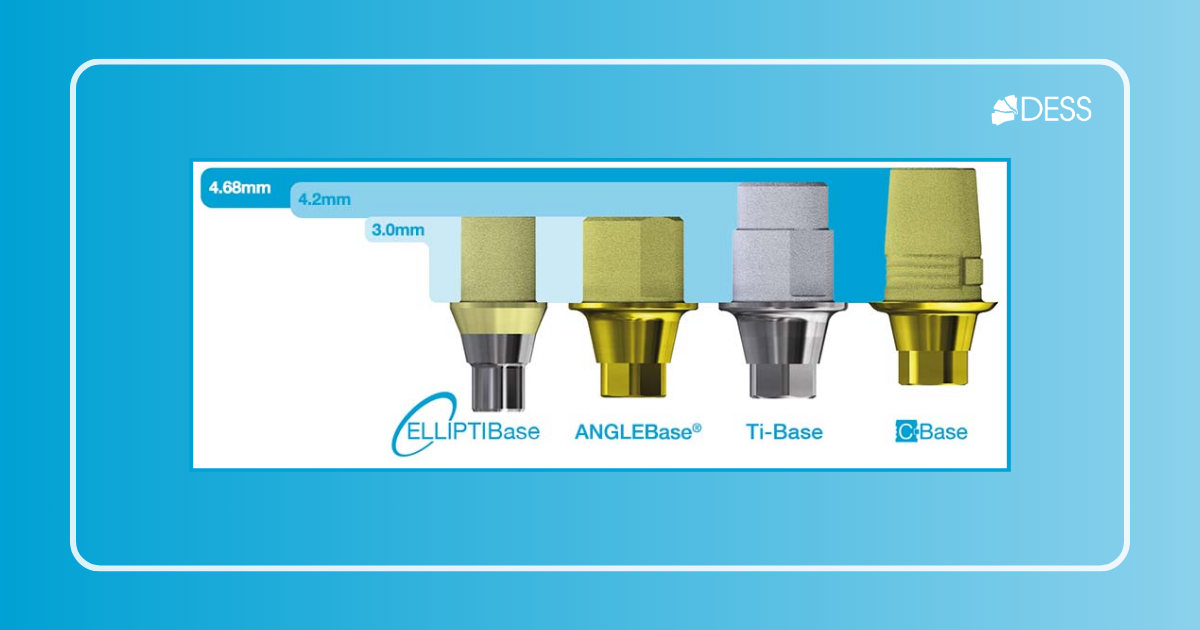
Once you have your tissue depth dialed in and you've selected your collar height, then you move to the next question — which is where most of the real decision-making happens.
The Straight Ti-Base: Your Bread and Butter
For well-positioned implants — meaning the implant axis is reasonably favorable for the planned restoration — the standard DESS straight Ti-Base is where you're starting. These are
manufactured from Grade 5 ELI Titanium, they're available across all the major implant platforms, and they come with SelectGrip already applied.
SelectGrip is DESS's patented sandblasting treatment that gets applied during manufacturing. This is worth spending a minute on, because it's one of those things that sounds like marketing language until you understand what it actually does. The treatment creates a controlled roughened surface in the cementation zone — exclusively in that zone, without contaminating the critical fit surfaces or the gingival area. The result is up to 500% greater retention compared to an untreated abutment surface. What that means in practice is that your cement bond is more predictable, your callbacks for loose restorations go way down, and you don't have to chase retention with sandblasting in the lab.
That last point matters more than it might seem. When labs sandblast Ti-Bases in-house, the consistency varies. The angle, the duration, the media — all of it introduces variability. SelectGrip eliminates that variable entirely because it was done correctly at the factory, every time, on every component. That's one less thing to think about and one more thing you can count on.
DESS straight Ti-Bases cover all the major implant systems — Nobel, Straumann, Zimmer Biomet, BioHorizons, Astra, Osstem, and many more — and they're available in free CAD/CAM libraries for 3Shape, Exocad, and Dental Wings. That library compatibility is essential for a smooth design workflow, and it's something I'd encourage you to verify for any component you're working with regularly.
ANGLEBase: When the Implant Axis Doesn't Cooperate
This is the one I wish I'd had on that buccal-cusp case earlier in my career. The ANGLEBase was designed specifically for situations where the implant placement creates an unfavorable screw access channel — and if you're doing enough implant cases, you're seeing this regularly. Surgeons are working around bone volume, sinus anatomy, nerve proximity. They place implants where they have to. Our job is to restore them predictably regardless of where that implant ended up.
The ANGLEBase gives you up to 25 degrees of angular freedom at the component level. What that means practically is that instead of fighting the implant angle in your design software — trying to work around a screw access hole that keeps wanting to exit in the wrong place — you correct it at the abutment. The component itself redirects the screw channel. You get 360-degree freedom around that axis, so you're not locked into a specific orientation correction. You dial in what you need for the case.
The shaft on the ANGLEBase is intentionally short — 3mm — but the bonding area is actually more than 33 square millimeters. DESS engineered it that way to preserve retention even with the reduced shaft height that the angular design requires. They also ran both de-bonding and fatigue testing on this component, including dynamic fatigue testing at 5 million load cycles. It passed. So you're not trading retention or durability for the angulation correction.
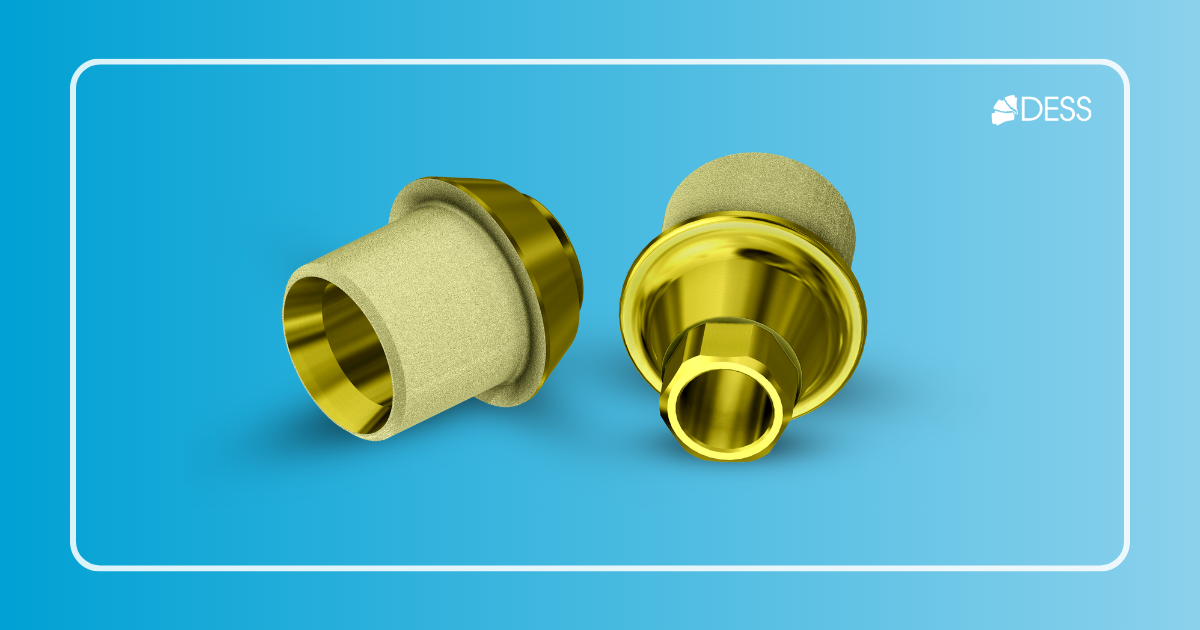
The ANGLEBase also carries the same SelectGrip surface treatment and the gold anodized finish, which has real aesthetic value in the esthetic zone where soft tissue color can be visible through thin tissue profiles. That warm gold hue integrates better with gingival tones than standard titanium silver in those situations.
I've made ANGLEBase one of my standard components for any case where the design software is telling me the screw access isn't going to land where I want it. It's not a specialty item you pull out for unusual cases — it's a core part of the inventory for any lab doing regular implant work.
ELLIPTIBase: The Narrow Space Solution
The ELLIPTIBase solves a completely different problem than the ANGLEBase, and it's one that comes up most often in the esthetic zone — specifically, 3.0 and 3.5 platform implants in incisor positions. These are your small-diameter implants, placed in areas with limited interdental space and high aesthetic demand. And the challenge with those cases isn't usually the implant axis — it's that the space constraints make conventional round Ti-Base profiles difficult to work with.
The ELLIPTIBase has an elliptical cross-section design specifically for those tight spaces. It's 22% smaller than a standard Ti-Base in terms of profile, which is a meaningful reduction when you're working in an area where every fraction of a millimeter matters. Despite that size reduction, the cementation zone remains essentially intact — DESS engineered the component to maintain the bonding area even as the overall dimensions were reduced.
The surface also has a ZrN (Zirconium Nitride) treatment, which increases the mechanical strength of the component and reduces plaque adhesion and inflammatory response — an important consideration in anterior esthetic cases where tissue health and long-term aesthetics are both on the line. The ELLIPTIBase has a maximum angulation of 20°, and it comes in two configurations — flat and corner — depending on implant orientation. And yes, SelectGrip is there too.
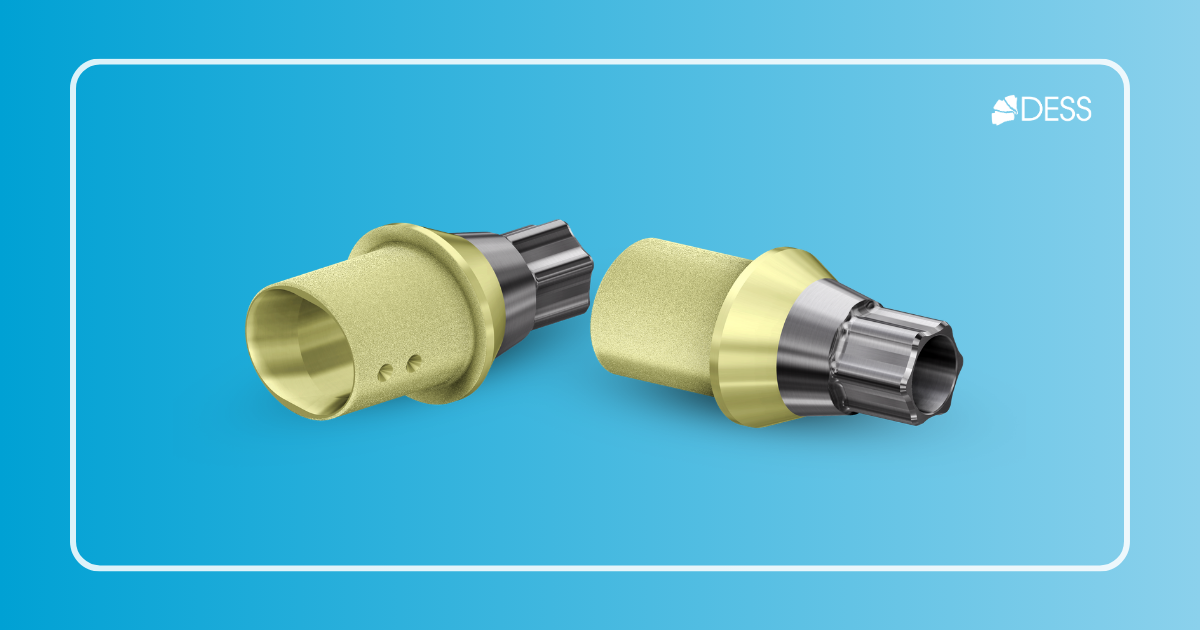
If your lab sees a regular volume of narrow platform implant cases — especially anterior cases with space constraints — the ELLIPTIBase needs to be in your component inventory. It's the right tool for that specific clinical situation, and there's no clean workaround without it.
C-Base: More Than Meets the Eye
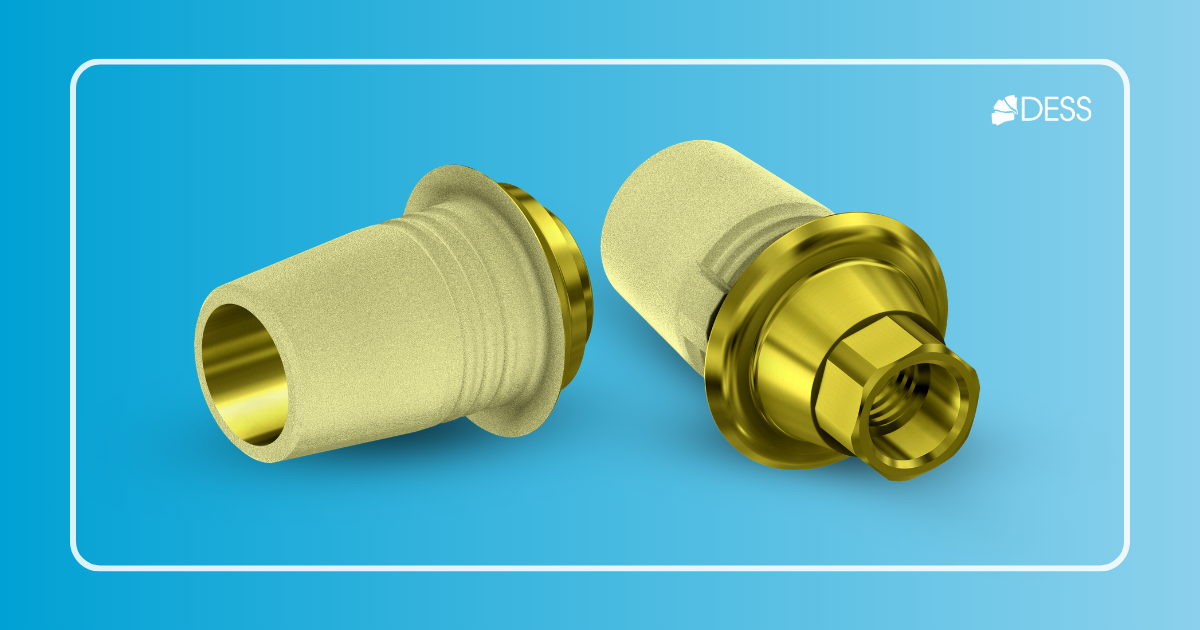
For those of you who are receiving CEREC cases or working with chairside milling workflows, the C-Base is worth knowing about. It's a DESS Ti-Base option originally designed for zirconia crown cementation in CEREC workflows, allowing you to directly replace the original CEREC Ti-Base while continuing to use the CEREC software. That's a unique capability within the DESS portfolio.
What many people don't realize, though, is that the C-Base isn't limited to CEREC. By using the DESS Scanbody along with the corresponding DESS C-Base libraries, it can also be used with exocad, 3Shape, and other CAD systems, making it a flexible solution across multiple digital workflows.
Another advantage is that the C-Base can also be considered as an alternative to a conventional DESS Ti-Base in certain situations. In addition to its digital workflow compatibility, it offers a gold anodized finish, a slightly taller shaft length, and different gingival height options. This can be especially useful when a clinician requires a Ti-Base in a gingival height that isn't available for a specific implant connection, but the corresponding C-Base is. In those cases, the restoration can be designed using the appropriate DESS C-Base libraries, providing additional flexibility without compromising the workflow.
The Decision Tree, Simplified
Here's how I think through the component selection on every implant case that comes in the door:
- Check tissue depth first. Confirm collar height before ordering anything.
- Is the implant axis favorable for the planned restoration? If yes, start with the straight Ti-Base.
- Is the screw access channel going to exit in an unfavorable position? If yes, ANGLEBase with up to 25 degrees of correction.
- Is this a 3.0 or 3.5 platform implant in a narrow anterior space? ELLIPTIBase.
- Is this a Cerec chairside milling case? Look at the C-Base.
- Verify CAD/CAM library compatibility for your design software before finalizing the component order.
That's it. It's not complicated, but it has to be intentional. The cases that come back — the remakes, the callbacks, the restorations that don't seat the way they should — most of them have a moment early in the process where the right component decision would have changed the outcome. Tissue depth that wasn't checked. An implant angle that wasn't accounted for. A narrow platform case where someone used a standard Ti-Base and fought the geometry the whole way through the design.
Why This Matters for Your Lab Business
I want to say one more thing about this, because I think it goes beyond just the clinical side of the conversation. Standardizing your component selection process — and having a clear, defensible decision tree for which Ti-Base you're using and why — is also how you build credibility with your referring dentists.
When a dentist calls you about a complicated implant case, and you can walk them through how you're going to approach the component selection, explain why you're recommending an ANGLEBase given the implant angle shown on the scan, and give them confidence that the screw access is going to land correctly — that's a different conversation than just quoting a price and turning the case. That's the conversation that builds a long-term relationship.
The DESS system makes this easier because of the compatibility range. Over 25+ implant systems covered, free libraries for all the major CAD/CAM platforms, components that are FDA-cleared and have gone through proper testing. You're not improvising. You're working from a system that was built to handle this breadth of cases, and you can explain that to a dentist with confidence.
I've been doing implant work for a long time, and I can tell you that the labs that are winning the implant volume right now are the ones that have invested in understanding their component options, built a consistent workflow around those components, and can communicate that workflow clearly to the practices they serve. Ti-Base selection is right at the center of that.
Final Thought
That buccal-cusp screw access case I mentioned at the top? That was the last time I got caught without the right component on an angled implant case. The ANGLEBase is in my standard inventory now, the ELLIPTIBase is there for the narrow platform cases, and the straight DESS Ti-Base covers everything in between. Tissue depth first, component selection second, design third. Every time.
If you want to dig into the full DESS Ti-Base line, head over to dess-usa.com. The product catalog is thorough, the CAD/CAM libraries are downloadable, and if you have questions about specific case applications, their team is responsive. Get it right upfront and the rest of the case takes care of itself.
Have a great week guys.
Jimmy Stegall, CDT | Here To Serve Dental LLC | dess-usa.com